Touching the Void & becoming more resilient

Last week I attended a course commissioned by the South West & Wales Vitae hub entitled “Focus on…Resilience”. This was a course aimed at people who support the development of researchers with an enticing topic that seems to be high on everyone’s priority list, even if the attribute of “resilience” might at first appear a little vague.

So it was with a little trepidation that I fumbled with the cellophane wrapped DVD entitled “Touching the Void” that we were given to watch as a prelude to the workshop. What did a documentary film about a couple of adrenaline junkied, risk averse, young alpine mountain climbers got to do with being a resilient leader? Being a typical last minute kinda person, I watched this film the day prior to the workshop. Basic plot; two young climbers (Simon Yates & Joe Simpson) with experience of climbing alpine inclines make a successful attempt to ascend to the summit of Siula Grande in the Peruvian Andes via the extremely difficult West face.

They of course do this and, with almost bare faced cheek, climb it in the Alpine style of making the ascent in one long push with a minimal amount of equipment. The problems begin on the descent via the North ridge. First, Joe Simpson slips and badly breaks his leg. This leaves his partner with the nigh impossible task of getting him off the mountain by belaying him down using two ropes tied together with the difficulty of having to negotiate the knot through the belay plate by slackening the rope.

A critical point is reached where Simon lowers Joe over a ridge and unbeknownst to him, Joe is unable to climb up or get a secure hold on the ice to provide the slack on the rope. He is left hanging with his weight slowly destabilising Simon’s own footholds. Finally Simon makes a decision to cut the rope holding his partner who falls some distance into a crevasse but survives. Fearing that Joe is already dead, Simon looks for but fails to find Joe so descends the rest of the mountain alone until he reaches basecamp.

The remainder of the film then focuses on Joe’s struggle to get out of the crevasse and then painstakingly crawl, hop, hobble, scrabble and fight his way, inch by inch, down the mountain until he reaches the basecamp, exhausted, broken and on the verge of death.

The story was undoubtedly moving and it evoked a lot of conflicting emotions in me and still left me with many questions as to the relevance of this story to learning about being more resilient in the workplace. Yes, I was sure that there were some lessons to be learned but couldn’t reconcile the life or death situations faced with my own experiences.

On the day of the workshop I was determined to remain open to what I would face and not be clouded by my emotions, to try and keep objectivity front and centre. I was relieved then when I met the facilitator, Rachel McGill for the first time. It was clear that she had much credibility in this field of development and demonstrated an empathy for the concerns I’d had.

So what was it all about? Let’s start with resilience as a term and put some sort of definition around it :-


“Having confidence in who you are and what you do, so that you create, build and take opportunities; ‘bouncing back’, knowing you will find a way through uncertainty, change and even crisis .”


Much of the first part of the workshop was then used to break down the concept of resilience in relation to leadership qualities, a process that Rachel descibes as the “Resilient Leader’s Elements”

Resilient_leaders_elements

The four elements are described as “Clarity of Direction”, “Resilient Decision Making” [grouped together as “What I do”] and “Awareness”, “Leadership Presence” [grouped together as “Who I am”]. Rachel’s company, Sunray 7, has developed an online assessment/questionnaire that probes these four areas giving respondents a snapshot of areas that they might want to develop to improve their overall leadership style (and by this we mean leadership in every day working scenarios not as “boss” or “CEO” of many people).

All of the participants of the workshop had completed the questionnaire and we collectively found hints/tips on improving things from people who do it well. It was an eye opening experience and provided much food for thought about the different attributes required to be a resilient leader.

So, what did I get from the day? I learned a lot from others in the room who clearly performed well in other areas of the Resilient Leader’s Elements than I. It was clear to me that there were things/lessons/ideas that were discussed as a result of watching the “touching the void” documentary. Personally the things that will stay with me for a long time are about the techniques that could help me be more aware of others and a line from the film about decision making in a crisis. 

“Keep making decisions, even if they are bad ones and act on them”

This approach will always throw up new options as a result, provide the basis to rescue a situation. This is not afforded by taking no action or decision, the likelihood is guaranteed failure.

Of course, I still have my reservations about the film itself, I question why the director/producer put both Joe Simpson and Simon Yates back on that mountain when it wasn’t clear as to what value it added and was clearly traumatic for the pair of them. Maybe one would be better reading the book that it was based on?

Paradigm wars and perspectivism

You wanna touch me?

You wanna touch me?

On Monday (11th July) myself and Dr Sharron Whitecross from Research, Business & Innovation contributed to one of the UWE Research Centre away days by facilitating a discussion about the challenges of working in an area of research that involves many disciplines. The researchers were concerned that the different perspectives from disciplines might get in the way of making progress on research projects, possibly as a result of lack of awareness or appreciation of the validity of different approaches or paradigms.

I come from a science background which almost exclusively features a quantitative approach to data and I know from personal experience that the scientific method is robustly defended as being valid in the world of research yet even among its proponents there is often a misinterpretation of the limitations.

So the challenge for me was to think of a way of engaging researchers in a discussion about research methodologies in a way that would be constructive. It was also a challenge to be able to facilitate the discussion without extensive knowledge of the variety of research methodologies used in the social sciences. I decided to tackle it in three ways, 1) to raise awareness of what is happening with research right now, 2) to explore the differences in paradigms using metaphors and 3) to ask for suggestions on how development might help in improving cohesion, understanding and the like.

We started by clarifying some of the language involved and setting the scene in terms of where things are going using the following slides:-

The main points here are that different folks tend to use terminology that doesn’t always translate exactly into other disciplines which can confuse things. It’s also true that the contribution of different disciplines looking at issues from a varying perspectives gives a better overall picture or outcome than single discipline approaches.

On to the metaphors, I (a quick nod to Jamie McDonald who suggested this to me) introduced this by retelling the parable about the blind men and the elephant whereby they are asked to describe the form of an elephant by touch. The blind men describe a part of the elephant that they are touching yet none of them have felt the whole of the animal. Variations of this story have been spread widely over the generations and the English verse is quite interesting, John Godfey Saxe wrote in the 19th Century:-

It was six men of Indostan
To learning much inclined,
Who went to see the Elephant
(Though all of them were blind),
That each by observation
Might satisfy his mind

The poem continues with each of the men describing their part of the elephant and concludes with:- 

And so these men of Indostan
Disputed loud and long,
Each in his own opinion
Exceeding stiff and strong,
Though each was partly in the right,
And all were in the wrong!

You wanna touch me?

You wanna touch me?

I thought this was quite a neat way to introduce the idea of “perspectivism”  as a prelude to getting the researchers to look at some different viewpoints on research methodologies and paradigms.

The researchers were then set the challenge of coming up with a metaphor to describe their perspective on multi disciplinary working. I separated them according to relative experience creating a group of research students, a group of research staff and a group of experienced researchers/leaders. The results were fascinating, the research students came up with a bakery theme centred around the recipe of a cake and the research leaders came up with a restaurant theme around the creation of dishes that would be appropriate for the diner. Both these examples appreciated that things could go wrong and the final product might not be as tasty or satisfy but also pointed out that the results could be well executed, a culinary masterpiece so to speak.

Interestingly the research staff group came up with a metaphor about a dysfunctional vehicle that was designed with disjointed input from all concerned and clearly was not a vehicle that was working well. I wondered if that had any significance? I think it created some food for thought.

The final part of the session was to collate some suggestions for development. Since the workshop, one of the researchers sent me the document, a toolkit entitled Practical considerations for leading and working on a mixed methods project”

As more and more collaborative research is being funded I am convinced that researchers need to broaden their perspectives on the different approaches that can be adopted to tackle the problems posed. As ever, I’m always on the lookout for any hints/tips on how this is best achieved.

PhD – The Movie. Coming soon to a university near you?

A few weeks ago I spied an announcement from the makers of the “Piled Higher and Deeper” comic strip that they had gone and made a film. Now this has me quite excited because, although the protagonists of this comic strip are set in the U.S., the shenanigans portrayed translate very well to the UK experience of being a doctoral student. The trailer is enticing…

So here’s the deal. I would very much like to be able to screen the PhD movie when it comes out (from 15 September 2011) at UWE, Bristol. We’ve got a cinema after all! I have tentatively signed up as being an interested party and now have been told an approximate cost to screen it (about US$500). But now I need to build a case for spending that amount.

So to you dear research students, how can I convince the budget holders that holding a film night is a good use of our development funds? How can I make it a worthwhile event? Tie in with a ‘welcome to UWE’ event? 

Thoughts, suggestions & comments welcome. I’m on a mission…

UWE Postgraduate Research Summer Connections

Connections is the theme for the UWE summer conference for postgraduate research students on Friday 1st July.

Connected


This event has been in the making for a little while now, most of the faculties and/or departments at UWE have recognised and provide the opportunity for their research students to present aspects of their research at internal symposia or conferences. It allows researchers to practice communicating their research to their close peers in a friendly, supportive environment. Last year I worked closely with the (then) Faculty of Social Sciences and Humanities to put on an event that would be useful & interesting to all research students in that Faculty regardless of their discipline areas. So we brought in an experienced facilitator, Malcolm Love, to talk to the research students about communicating their research to a wider audience. This was followed by an inspirational talk by Professor Len Barton on the topic of getting your research published, he shared many tips for early career researchers.

Fast forward a year and we are trying to make this an event for research students from across the whole of UWE, an event that would be useful or interesting regardless of ones subject area, something that I hope will become a regular fixture in the skills development calendar.

Postgraduate Research Student Summer Connections Programme

So what’s lined up?

1) Janet Wilkinson from Three Times Three will be opening the day with a session on how to ‘make connections with purpose’. She has a really intuitive take on how to get the best out of situations where engaging and ‘networking’ (some people find this term a bit…corporate?) with people is required. Inspirational facilitator she definitely is & I have worked with her for nearly ten years now.

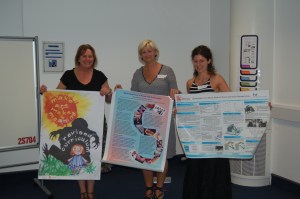
2) The Poster Session. We’ve invited all research students to submit a poster for this event, it will hopefully showcase the diversity of the research that goes on across the university. All the posters will be entered into a competition to win the prizes we have up for grabs!

3) A key note address from Professor Paul Gough, the deputy Vice Chancellor of UWE and the most senior bod who oversees research activity. He came to the South West Universities GRAD School at Buckland Hall last year and gave a fascinating insight into how he used his networks to advance in his career. 

4) The Judges! I’ve called in a few favours to gather a select panel of learned folks to decide who will get the prize. We have Paul Gough to chair, Janet WilkinsonKaren Bultitude from the Science Communication Unit, Dee Smart who oversees community & public engagement at UWE and Neil Willey who is a reader in environmental plant physiology. And the prizes? 1) An Amazon Kindle, 2) £75 of Amazon Vouchers, 3) £25 iTunes voucher

5) The free food & drink! Key to any good research student gathering is the unwritten rule that the catering needs to fulfil the needs of your most impoverished of researchers so we have put on a free buffet lunch and the event will close with a drinks reception + canapes (we are talking UWE wine though which is high in alcohol, high in tannin, low in palatability…)

And that’s not all folks…. Some of the postgraduate research student representatives are organising an informal trip to the Canteen at Co Exist in Stokes Croft after the drink reception, surely a good way to start ones weekend.

How do you get in on the act? You can find out more here (and register if you are a UWE research student) at the Research Student Summer Connections Page 


I’ll look forward to seeing you there and I’ll post up highlights and pictures in due course.

The Digital Researcher Evaluation – blog style

On Tuesday 14th June, we ran a course at UWE entitled “Becoming a digital researcher” (#druwe) which was facilitated by Dr Tristram Hooley from the University of Derby with a little help from me. Throughout the day we covered:-

  • Personal Learning Environment – How and where do we get our information from
  • Social Media Tools – The technical bit of using tools is less important that the wider principle of exploiting networks to enhance your personal learning environment
  • Networks – It really is all about your networks, the strength of them. It is that that pays dividends when using social media in your research area

I am reposting the slides that Tristram used on the day below: 


druwe.ppt
Download this file

What Tristram and I would like is for participants of the day is to give us some feedback on how it went, the content, the delivery with a view to understanding what it is that we can do to make it better. Neither of us are “gurus” of social media but we both have experience of being researchers and using some of the tools available. Did we get it right?

I noticed that Ann Grand has written a reflective blog entry about the day and I would encourage you to either do something similar (it will give an excuse to write another blog entry!) or use the comments section below this post to add your thoughts. 

Thanks for taking the time to attend.

Experimental blogging at #druwe

In the afternoon session of the “Becoming a digital researcher” course at UWE, we have just talked about using blogs. There was lots of discussion around why folks use them. For me, I wanted a place to put my “work” thoughts, stuff on my bread and butter existence, that of researcher skills development.

Dr Tristram Hooley talking about blogs

Dr Tristram Hooley talking about blogs

It’s been interesting to hear others talk about using it to balance out parts of their lives, somehow organising it, compartmentalising so to speak.

Recently, I followed the writing a blog session that Vitae ran for PGR research students entitled “what’s up doc” and I saw (on twitter) many hints and tips about writing a blog. You can find some of that here.

I do suffer from “performance anxiety” a bit so work hard to suspend my quality control feature in my brain before writing, just to tell it like it is really.

I now need to work on being a bit more regular with my posting because I have things I want to put up just find excuses not to make the time.

Becoming a Digital Researcher – #druwe

Social media is booming. You can now find user generated content in just about all spheres of life; politics, music, history, you name it and it can be found. What about the field of academic research? Are the critics right to sneer at social media as being trivial time-wasting activities or could there be a real benefit to the researchers who do engage using more of the tools at their disposal? As with most things it would appear that there are pros and cons but with the right tools in the right context, it can be an effective way for researchers to raise their profile, swap ideas, get feedback and, possibly, find that all important next job.

This is why that next week, I’m glad that we are running a workshop at UWE entitled “Becoming a Digital Researcher”. This is going to be a hands on demonstration of some of the social media tools that are being used in academic research. I’m especially pleased that Tristram Hooley will be leading the day, he was one of the authors of a Research Information Network publication on this topic: Social Media: A Guide for Researchers who also has his own (very good) blog called Adventures in Career Development.

I’m also interested in how these social media tools have evolved and become part of the toolkit that researchers can access, I can recall clearly how the web based tools moved on at pace throughout my own research degree journey and I like to think that I keep up with some of them!

In thinking about this post, I came across the infographic below from Fred Cavazza which shows the current landscape with respect to social media, an attempt to classify what is out there. Just by looking back at his similar diagrams over the past four years demonstrates how quickly things progress!

5260700799_6b27dab736_b

The social media landscape 2011, a mapping of the types of social media tools in use


If you are interested in following the goings on via twitter we will be using the hashtag #druwe 

If you are interested in coming along in person, drop me an e-mail paul.spencer@uwe.ac.uk

Show me the money!

Last week UWE held one of its bi-annual Researchers’ Forums. This is an event that we have been running for a few years now with the intention of sharing information with and seeking feedback from research staff in the university about issues and/or initiatives that affect what they do. At the last forum in September of last year, we had a very interesting day facilitated by Kate Tapper (Bud Development) that saw both researchers and their managers/principal investigators in the same room at the same time (anyone in the field of researcher development will know this is not easy to achieve!) discussing how best to support the career development of researchers. Probably the most important thing that came out of that day was that researchers wanted their managers and/or leaders to give all the facts about the environment in which they work.

When it came to putting together the programme for the Researchers’ forum this time around, it was decided to honour that request so the senior management in research were asked to come and explain where the money for research comes from and, more importantly, how was it spread around the various activities that UWE undertakes.

Thinking back to when I was a research student and then subsequently a post doctoral researcher, I had no real clue as to how the funding of research really worked, I had some idea but was never really sure of how it was decided who gets what. All I could be sure of from my perspective was that one had to put a lot of effort into writing many applications for funding and seeing very few of them being rewarded as successful. As the years have rolled on and I’ve been immersed in the wider world surrounding research, I’ve a much clearer idea of how it works yet it is still fairly complicated.

I was cheered then when I came across a guide published by the Research Information Network (RIN) that sets out the how the funding of research works on a national level making it that little bit easier to “Show me the money”.

This source for this file is here

The majority of funding for research comes via two routes from Government which is why it is called the “Dual Support” system.

On one side, the Treasury hands over a sum of money to the Government department Business, Innovation & Skills (BIS) which is then distributed to the UK Research Councils (there are seven of these that cover the broad discipline base). Universities then make applications to the Research Councils for a number of different schemes.

On the other side, again the Government hand over money to the national funding councils (HEFCE, HEFCW & SFC) which distribute money to universities based on what is called a Quality Related (QR) funding allocation. This is decided by a peer review assessment on a range of subject areas that takes place every 6 years or so. The next exercise is two years away and is called the Research Excellence Framework (REF).

There are a few other avenues of research funding for example, charities and other government departments that support fairly specific areas of endeavour as well as the private sector who, usually, have a vested interest in the outcomes of the research. Increasingly important is the research funding that is available from the EU.

Why does any of this matter? The distribution of research funding has become something of a game, rather like playing in the football league where the top premiership teams have access to a disproportionate amount of the funding available where as the lower league teams have to work hard at ‘staying up’ and much of the success to be had depends on team tactics.

The best advice that I can give to aspiring researchers is to learn a little bit more about the rules of the game and how to play them to your advantage.